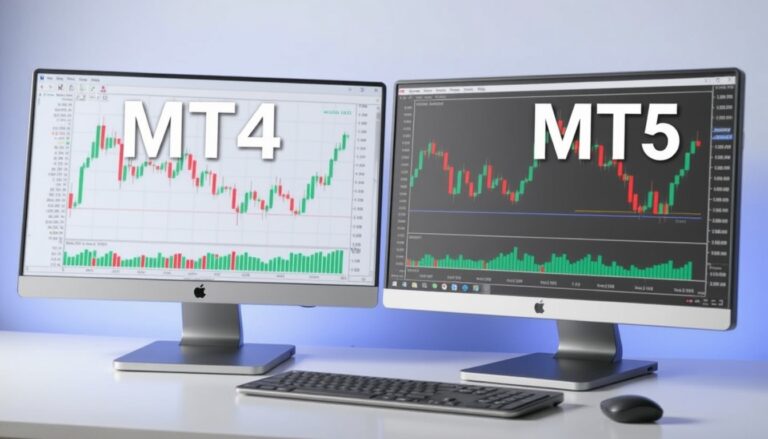
In the world of online finance, MetaTrader is a industry-standard software with an estimated user base exceeding ten million. This powerful suite supports multiple markets, including forex and stocks. It connects directly to brokerage accounts for seamless trading execution.
The software is split into two distinct systems: MT4 and MT5. While they share a family name and core functions, they possess subtle but important differences. For anyone funding a live account, understanding these variations is crucial. The choice impacts strategy, asset access, and overall performance.
This analysis covers algorithmic trading options and factors affecting real account performance. The decision is not simply about selecting a newer version. It is about matching platform features to personal trading goals and asset preferences.

Traders must evaluate which system offers the best tools. The right platform can define success in today’s fast-paced trading environment.
Understanding MetaTrader 4 and MetaTrader 5
A deep dive into the MetaTrader ecosystem reveals a story of continuous innovation and expanding market access. Grasping the history and shared design principles of these systems provides essential context for traders.
Platform Overview and History
MetaTrader 4 launched in 2005, building a loyal following over nearly two decades. It became the industry standard for forex trading, praised for its reliability. The software boasts over 10 million downloads on Google Play and a 4.8-star rating on the Apple App Store.
MetaTrader 5 arrived as the next-generation, multi-asset successor. It supports stocks, commodities, and futures beyond just forex. A significant shift occurred in 2025, when the newer platform captured 54.2% of the combined trading volume between the two.
Developer MetaQuotes Software stopped issuing new licenses for the older version in 2018. However, it continues to provide maintenance updates, with the latest released in February 2025.
Core Functionalities and Design
Both terminals share a robust set of core features designed for active traders. These shared functionalities form the backbone of the user experience across either platform.
- Fully customizable trading interfaces and workspaces.
- Comprehensive mobile support for trading on the go.
- An extensive suite of built-in technical analysis tools.
- Seamless connectivity to a wide range of global brokers.
It is crucial to understand that these are third-party trading platforms. They act as sophisticated software that connects to broker services rather than being brokers themselves. This distinction is key for new traders evaluating their options.
Key Features of MetaTrader 4
The enduring popularity of MetaTrader 4 stems from its laser-focused design for forex trading. It delivers a powerful yet streamlined experience that currency specialists prefer.
Streamlined Interface and Simplicity
This platform is lightweight and runs efficiently, even on older computer systems. Its design philosophy prioritizes ease of use without sacrificing core power.
Traders get nine standard timeframes. These range from one-minute to daily charts. They cover the most common intervals for developing currency strategies.
The technical analysis suite is robust but not overwhelming. It provides sufficient tools for most market approaches.
- 30 built-in technical indicators.
- 23 analytical drawing objects.
Widespread broker support makes this software highly accessible. More brokers offer it than its successor, which is crucial for those with specific broker needs.
Hedging Capabilities and Forex Focus
A defining feature is true hedging. The platform lets traders open simultaneous long and short positions on the same currency pair. This is a vital risk management tool.
Its development was optimized specifically for currency markets. Every workflow and feature is tailored for forex pair trading. This makes it the superior option for dedicated currency traders.
The straightforward MQL4 programming language supports this focus. It allows users to create simple automated strategies without needing advanced coding knowledge.
Key Advantages of MetaTrader 5

For traders seeking to diversify beyond currency markets, MetaTrader 5 presents a powerful and versatile solution. This platform is engineered for modern, multi-asset trading environments. It provides a significant upgrade in analytical power and execution technology.
Multi-Asset Trading and Expanded Markets
The software supports a wide range of financial instruments. Traders can access stocks, commodities, futures, options, and bonds from a single terminal. This makes it ideal for building a diversified portfolio.
Its multithreaded engine processes orders with remarkable speed. This is crucial during periods of high market volatility. The platform also uses a netting system for stock and futures trading. This approach aligns with institutional practices for position management.
Advanced Charting and Technical Analysis Tools
Analytical capabilities are greatly enhanced. The platform provides 38 built-in technical indicators and 44 analytical objects. This expanded toolkit allows for deeper market analysis.
Traders get 21 different timeframes for chart analysis. These include unique intervals like 11-minute and 7-hour charts. Such granularity helps in spotting precise entry and exit points.
Chart customization is superior. Users have fine control over drawing colors, styles, and line weights. Specialized Gann tools are included for advanced geometric market analysis.
Enhanced Backtesting and MQL5 Innovations
The MQL5 programming language is object-oriented and more flexible. It allows developers to create highly complex automated trading systems. This language is based on elements of C++, offering greater power.
Backtesting strategies is faster and more efficient. The revamped Strategy Tester supports multi-core and multi-threaded processes. It is optimized for modern 64-bit computer systems.
An integrated economic calendar is a convenient feature. It can be pinned directly to charts. This helps traders monitor macroeconomic events without leaving the platform.
Comparing Mt4 vs Mt5 for Real Accounts
A direct comparison of core functionalities reveals the practical impact on daily trading. For traders with real money on the line, these key differences in tools and support are decisive.
Trading Tools and Indicator Diversity
The older platform provides 30 technical indicators and 23 drawing objects. This is sufficient for many common strategies.
Its successor expands this toolkit significantly. It offers 38 built-in indicators and 44 analytical objects. This greater diversity supports more complex, multi-asset analysis.
Order Execution, Timeframes, and System Efficiency
Chart flexibility is another major divergence. One system has nine standard timeframes. The other provides 21, including unique intervals for precise analysis.
Order execution options also vary. The basic platform supports four order types. The advanced one features six, including specialized stop-limit orders for precise entries.
A key advantage is the Depth of Market (DOM) feature. It displays live market depth, a functionality not available in the simpler system.
Broker Compatibility and Platform Support
Broker availability is a crucial real-account factor. The established platform is supported by far more brokers globally.
This wider support can affect available markets, execution speeds, and pricing. Traders must verify their chosen broker supports their preferred terminal.
Both platforms are free for retail use. Actual trading costs come from broker spreads, commissions, or fees.
Technical Analysis and Charting Capabilities

The precision of market analysis often hinges on the tools available within a trading platform. For traders who rely on charts, these capabilities are not just features; they are essential components of a successful strategy.
Strong charting software allows for clearer identification of trends and patterns. This directly impacts decision-making and execution speed.
Customizable Indicators and Analytical Objects
Both platforms provide a suite of standard technical indicators like moving averages and oscillators. The newer platform, however, offers a significantly broader native selection.
Its enhanced processing power enables certain complex custom indicators to run exclusively on it. This is crucial for traders using specialized analytical tools.
The practical difference is clear in the number of graphical objects supported. One system allows for 24, while the other supports up to 44 for more sophisticated, multi-layered chart analysis.
Drawing Tools for Precise Market Analysis
Annotation capabilities let traders mark chart lines, channels, and geometric shapes. These drawing tools are vital for visual market analysis.
The advanced platform provides superior control over drawing colors and styles. This allows for better organization when managing multiple analysis layers.
It also includes several Gann tools for advanced geometric and time-based analysis. These are not available in the more limited drawing toolkit of the older system.
Enhanced charting capabilities support more precise identification of support and resistance levels. Traders can spot chart patterns and trend structures with greater accuracy.
Algorithmic Trading and Expert Advisors

The rise of algorithmic trading has transformed how traders interact with financial markets. For those using real accounts, the choice of platform directly impacts their automated trading strategies. This section examines the core differences in algorithmic capabilities.
Programming Languages: MQL4 versus MQL5
The foundation of any automated system is its programming language. MQL4 is a simpler scripting language tailored for single-asset forex strategies. It is accessible for traders new to coding.
MQL5 is object-oriented and incorporates elements of C++. This allows developers to build far more complex expert advisors with advanced logic. A critical limitation exists: code written for one platform cannot run on the other.
Backtesting and Strategy Optimization
Testing an automated strategy is where the platforms diverge dramatically. The older system relies on single-thread processing. Complex backtests can take hundreds of hours.
The newer platform’s Strategy Tester supports multi-core and multi-threaded operations. It is optimized for modern 64-bit computers. The same test might finish in just a few hours.
This efficiency allows traders to optimize their expert advisors across thousands of parameter combinations quickly. Developers can also sell their creations in the dedicated MQL5 marketplace.
Choosing the Right Platform for Your Trading Strategy

Selecting the optimal trading terminal is a critical decision that hinges on personal strategy and goals. There is no universally superior choice. The best fit depends entirely on an individual’s experience, market focus, and technical needs.
Assessing Individual Trading Goals
Traders should ask key questions before deciding. Which markets do they trade? Is their focus exclusively on forex or multiple asset classes? Do they employ hedging strategies? What is their experience level?
Forex-focused traders, especially those using hedging, may find the older platform better suited. Its streamlined design aligns with currency trading. Multi-asset traders or those needing advanced analysis benefit more from the newer platform’s expanded capabilities.
Balancing User Experience with Functionality
The simpler interface and lighter system requirements of one platform appeal to beginners. Some traders find the additional features of the other unnecessary for their approach.
Overall, the newer software is generally the better choice for most. It receives full developer support and offers superior, future-proof capabilities. Unless a trader relies on specific, non-transferable tools from the older system, the advanced platform is the recommended choice for long-term success.
Real Account Considerations: Costs, Brokers and Execution

The profitability of a live trading strategy is directly influenced by three critical factors: transaction costs, broker support, and order execution. While the software itself is free, the real expenses and operational trust lie with the brokerage firm.
Trading Costs, Spreads, and Account Types
Actual trading costs come from broker-imposed spreads, commissions, and fees. These vary significantly between firms and account types. A common structure is the standard spread-based account.
Many brokers also offer commission-based raw spread accounts. These often feature lower effective costs for high-volume traders. It is common for brokers to provide better pricing on their MT5 offering compared to MT4.
Evaluating Broker Support and Market Access
Broker selection is as crucial as platform choice. These firms handle order execution and hold trader capital. Not all brokers offer both platforms, so compatibility must be verified.
Reputable brokers with strong MetaTrader support include IC Markets, known for algorithmic trading and competitive pricing. Pepperstone offers a balanced forex and CFD range with low effective spreads.
FP Markets stands out for its consistently low spreads. Traders should evaluate a broker’s regulation, reputation, and execution policy. This ensures reliable access to global markets for their trading strategies.
Final Reflections on MetaTrader Platforms
Ultimately, the decision between these two industry giants comes down to personal trading style and market focus.
MetaTrader 5 is generally the superior choice for most. It receives full developer support and offers expanded multi-asset functionality. This includes more order types, technical indicators, and faster backtesting.
MetaTrader 4 remains a viable option with a twenty-year track record. Its simplicity and true hedging are perfect for dedicated forex traders.
Both are powerful, professional tools trusted by traders worldwide. Selection should match individual goals. Trying demo accounts provides firsthand experience.
Successful trading depends more on strategy and discipline than platform choice. The right tools, however, provide a significant advantage.